


Trade Bloc
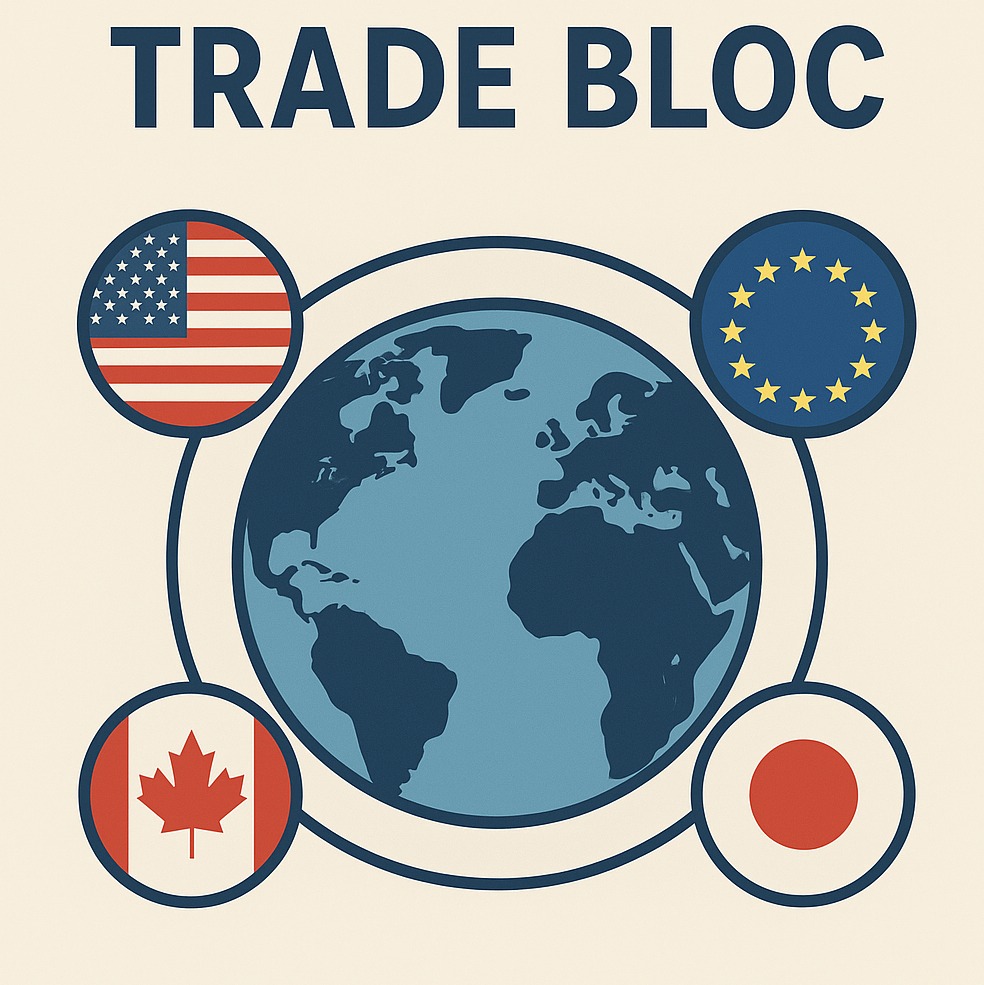
A trade bloc is an intergovernmental agreement where two or more countries come together to form an accord regarding trade that is favourable and contributes to the growth of the economy. Such a trade bloc always prioritises the economic growth of all the member countries involved in the agreement. It also enhances the competitiveness of countries in the international market.
1. Reduction or Elimination of Tariffs and Trade Barriers.
Many countries form the trade bloc to boost their economic activities by sourcing the necessary goods. Importing and exporting make the necessary goods for economic growth possible. If both countries remove any tariffs on imports, this action can boost both imports and exports. Making all necessary goods available through exporting and importing can significantly contribute not only to economic growth but also to the overall development of countries. Eliminating barriers can encourage exporters and importers to execute their trade smoothly.
Example
1. The ASEAN free trade agreement agreed to reduce or remove tariffs on near about 80 per cent of traded goods, specifically machinery, chemicals, and agricultural products. India and 10 other ASEAN countries are involved in this trade bloc.
2. NAFTA (North American Free Trade Agreement) implemented a free trade area where tariffs on most goods were eliminated.
3. EU (European Union) countries or members of the EU do not impose any tariffs or customs on imported goods. It includes products such as German ones easily sold in countries like France without any import duty or tariff.
2. Customs Union
A customs union is a trade bloc that enables the member countries to adopt a common tariff on imports from non-member countries, in addition to reducing the internal tariffs among the members of the trade bloc.
Example
European Union (EU) Customs Union: 27 European countries, including Germany, France, Italy, and Spain, are the members of this trade bloc. None of these countries apply any tariff or customs duty on imported goods. All the members adopt
Southern African Customs Union
Central American Common Market
Gulf Cooperation Council (GCC) Customs Union
East African Community Customs Union
Eurasian Economic Union (EAEU)
3. The free movement of goods and services
As the member countries agree on the terms regarding free trade and eliminate barriers, both countries can benefit from trade. The trade executed among these countries will be made without heavy restrictions or any tariffs or taxes. Here a win-win situation is created via a trade bloc through which all the member countries benefit from free exporting and importing.
4. Free Movement of Labour and Capital (Common Market)
A trade bloc not only adopts the CET common external tariff among member countries, but it also allows labour and capital to work and move across national boundaries. It allows the labourers or workers to move freely without a work permit among the member countries of the trade bloc. It gives better advantages to both countries to utilise the workers for productive activities.
Example
The EU, which is the European Union, allows all the member states to utilize labor or workers in any country without a permit. The workers can also take advantage of employment, which can be easily available in the member countries of the trade bloc.
5. Harmonisation of policies and regulations
Many countries may have different policies and regulations on international trade. Making these policies and regulations parallel with each other enables them to execute international trade smoothly and without any strong restrictions or trade barriers. This alignment has encouraged exporters and importers to engage in trade as much as possible, thereby contributing to the economic growth of member countries.
Example
The European Union adopted the Common External Tariff, which enables it to make regulations on product standards (such as food safety, pharmaceuticals, and electronics) that are supplied among member countries.
6. Common External Tariff (CET)
CET enables the member countries to allow non-member countries to export goods without any import duty. All the member countries allow non-members, due to which their policies are harmonised and promote trade. It prevents the member countries from negotiating their own trade to gain a dominant position. Hence, all the countries equally execute the trade without any trade partiality.
Example
Mercosur, an American trade bloc made up of Brazil, Argentina, Paraguay, and Uruguay, adopted the CET for goods imported from non-member countries.
7. Economic and Political Cooperation
Economic and political cooperation includes the policies and creating an international environment that is favorable for all the member countries to execute trade without any restrictions or barriers. It helps the member countries to manage cross-border issues related to security, defense, and environmental protection.
Example
The European Union formulated the economic policies and political support in such a way that protects not only the economic issues, such as inflation, currency issues, etc., but also supports protecting and environment.
BRICS is also the trade bloc that formulates the economic policies which protect the environment along with the international trade or cross-border trade from various issues such as security issues, defense issues, etc.
8. Investment Protection and Cooperation
Trade blocs focus on the development in areas such as infrastructure, technology, and Research development through the protection of foreign direct investment (FDI). These policies protect the interests of investments across all member countries. It creates a supportive and protective environment for the investors who are investing in all the member countries. It promotes investment and boosts the economic growth of all the member countries.
Example
ASEAN (Association of Southeast Asian Nations) made an agreement, the ASEAN Comprehensive Investment Agreement, that ensures non-discriminatory treatment of any foreign investors.
9. Dispute Resolution Mechanism
Dispute resolution mechanisms protect all the member countries from any conflicts that arise due to violations of trade agreements or any unfair trade practices. The dispute resolution mechanism maintains the integrity and fair trade practices between the member countries.
Example
The World Trade Organization (WTO) has a global dispute resolution mechanism that maintains the integrity and fair trade practices among all the member countries. The EU and Mercosur also have their internal dispute resolution processes to handle conflicts between the member countries.
10. Regional Development and Economic Integration
A trade bloc also focuses on regional balance through regional development and reducing the disparities between member countries. The developed countries help the underdeveloped and less developed countries by providing financial support, assistance in infrastructure and development projects, etc. By implementing these practices, member countries can reduce disparities and promote growth for all.
Example:
The EU provides financial support to all the member countries that are in need. The programmes, such as the Cohesion Fund, promote projects in infrastructure and other areas.